


Production Planning & Scheduling System Modernization
A production plan should create direction — not constant disruption.
Evocati helps manufacturers replace reactive, disconnected planning and scheduling processes with structured systems built around demand, capacity, materials, WIP, production priorities, and actual execution data.

Bad Inputs Create Bad Schedules
Demand → Materials → Capacity → WIP → Production Plan → Schedule → Execution
• Inaccurate demand
• Unreliable inventory data
• Theoretical instead of true capacity
• Poor WIP visibility
Bad information upstream creates schedule instability downstream.
Schedule Changes → Expediting → Missed Due Dates → Overtime → Firefighting
The schedule is often where the problem becomes visible — not where the problem began.
Production Planning & Schedule Stability
The schedule is often only where the problem becomes visible.
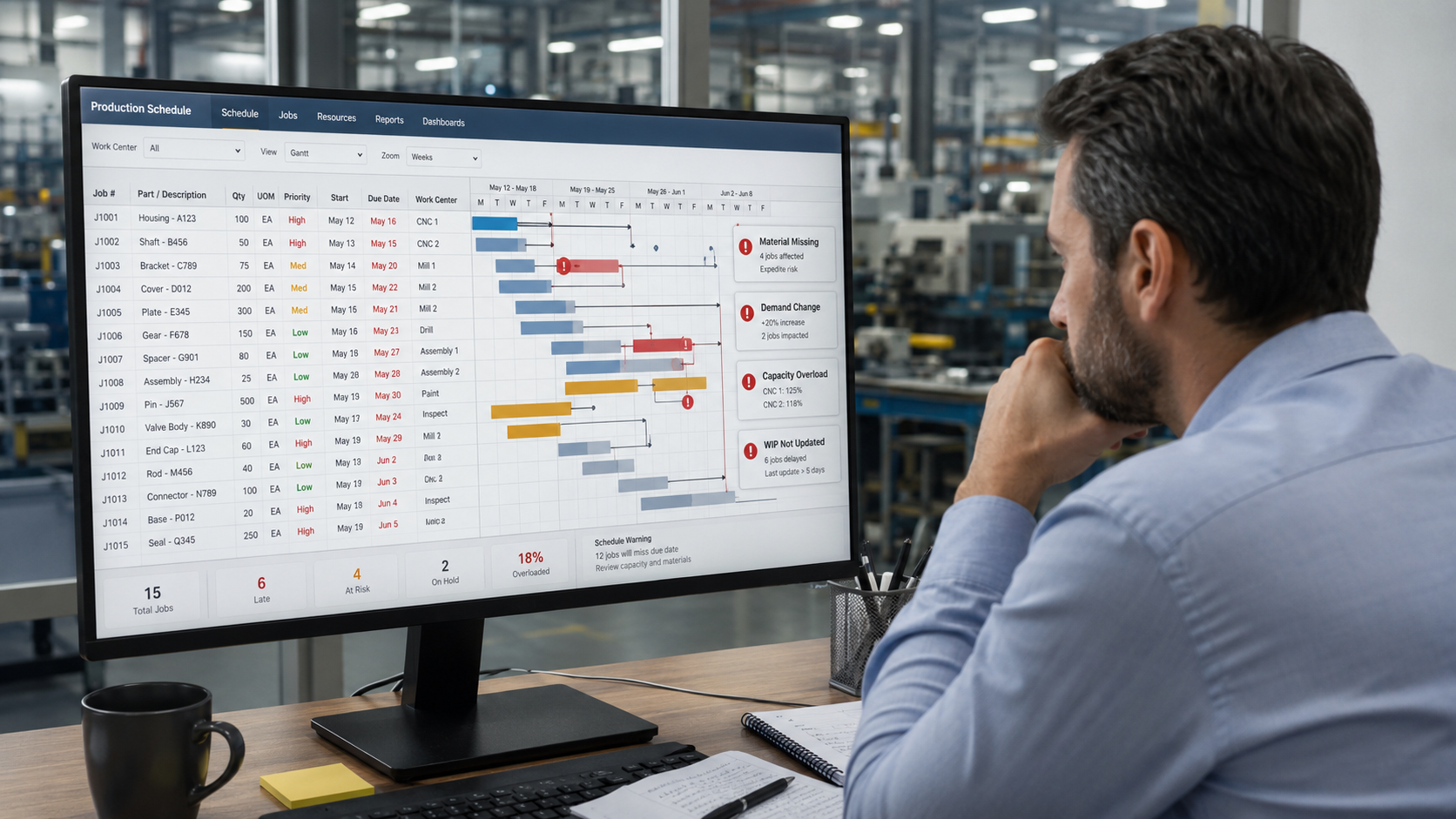
Production instability rarely starts with the schedule itself. Disconnected demand signals, inaccurate material availability, capacity constraints, poor WIP visibility, downtime, and changing priorities all feed into the planning process.
When those inputs are not aligned, planners are forced to react. Schedules change repeatedly, materials are expedited, resources are shifted, and customer commitments become harder to trust.
From Manual Planning to Digital Production Control
Modernization is more than replacing paper with a spreadsheet. Evocati helps manufacturers convert fragmented planning methods into a structured digital system that connects the information production needs to plan, schedule, and execute effectively.
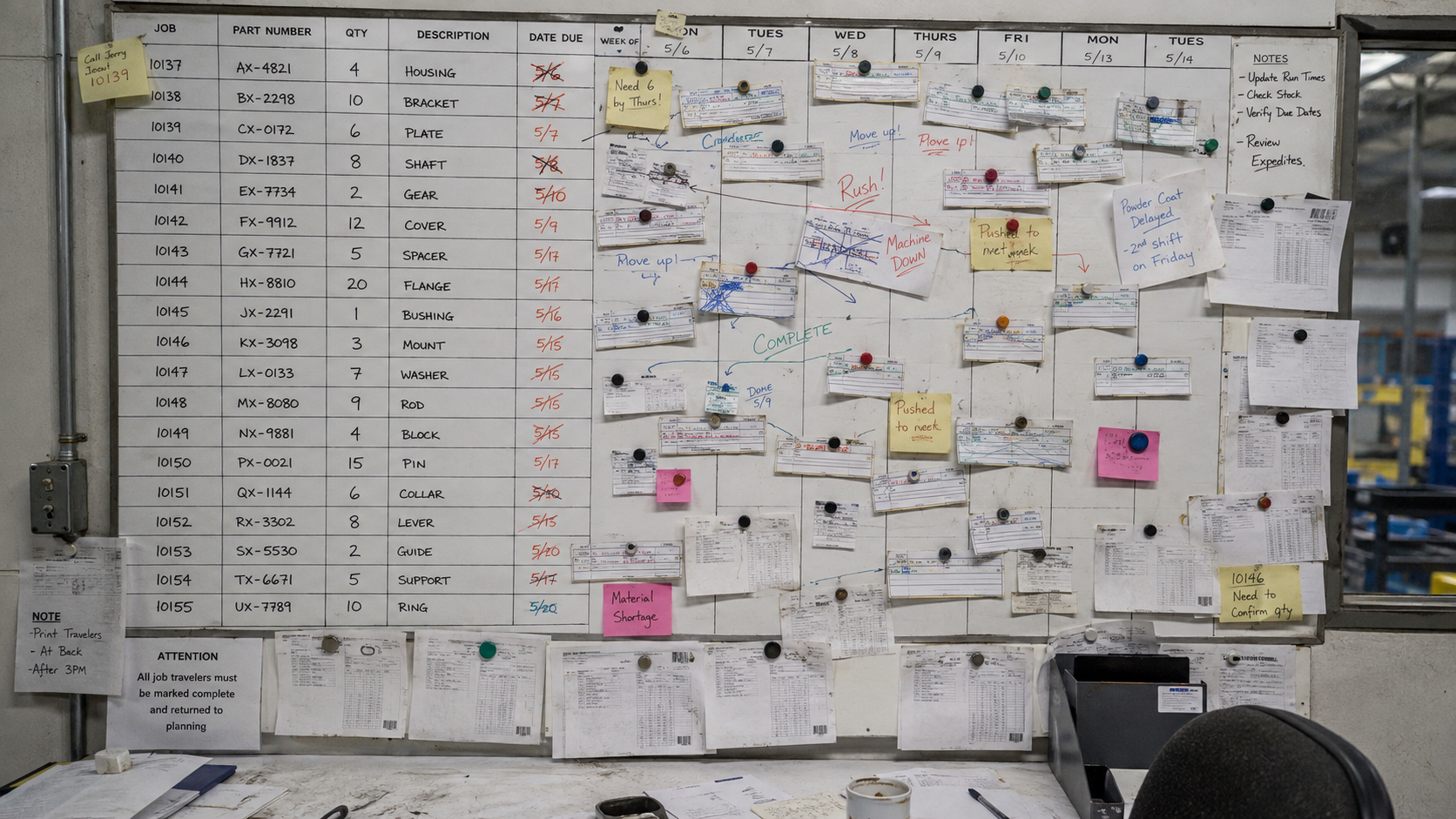
BEFORE — Fragmented Planning
• Paper production schedules
• Whiteboards
• Disconnected spreadsheets
• Manual ERP exports
• Tribal knowledge
• Reactive schedule changes
• Limited forward visibility
← MODERNIZE ←
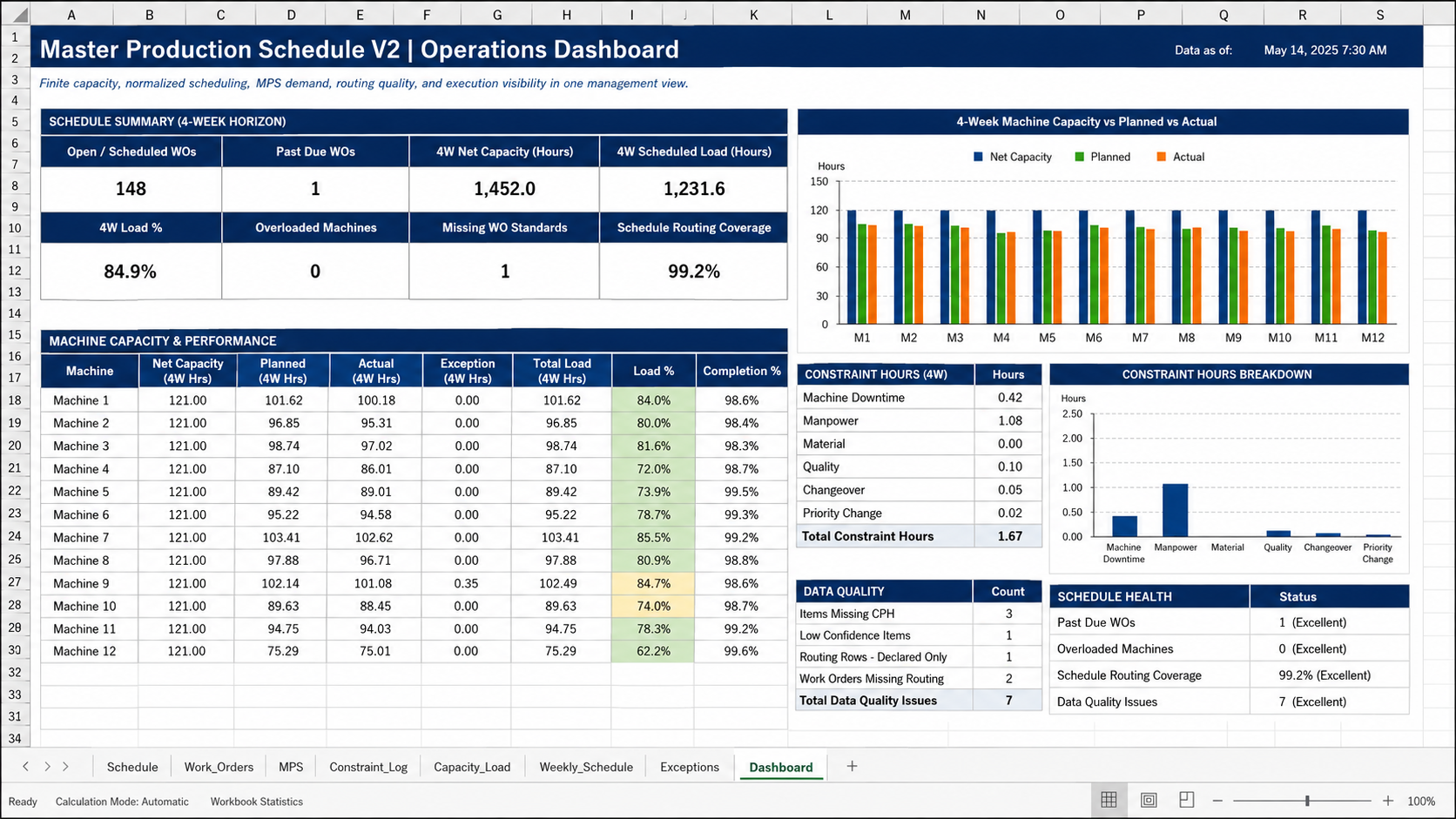
AFTER — Structured Digital Planning
• Master production schedule
• Forward production visibility
• Capacity loading
• Material requirements
• WIP visibility
• Work-center scheduling
• Constraint tracking
• Planned vs. actual production
• Schedule adherence
What the System Can Look Like
One Planning Framework Connecting
• Historical demand
• Forecasting
• Capacity
• WIP
• Material requirements
• Downtime
• Production scheduling
• Actual production performance
How We Modernize It
Modernization does not always require a major ERP replacement or a six-figure software investment. Evocati can help manufacturers build practical, lower-cost planning and scheduling systems using the tools they already have, supplemented by purpose-built digital solutions where needed.
The goal is not to buy the most expensive system available. The goal is to create a planning environment that gives the operation better visibility, control, and execution without unnecessary complexity or cost.
→
01 — Assess & Stabilize
Understand the current planning process, identify broken inputs, determine how schedules are currently created, and correct the logic causing instability.
02 — Build the Digital Framework
Connect demand, materials, capacity, WIP, downtime, priorities, and scheduling into a structured planning system.
03 — Implement & Control
Establish planning cadence, ownership, planned-vs-actual tracking, schedule adherence, constraint visibility, and operating discipline.
Measurable Outcomes
Weeks to Months of Forward Production Visibility
Greater visibility into upcoming production requirements, capacity needs, and constraints.
Improved Schedule Adherence
Stronger alignment between what is planned and what operations actually execute.
Reduced Schedule Volatility
Fewer unnecessary last-minute changes and priority shifts.
Reduced Expediting
Earlier identification of material and capacity constraints.
Better Capacity Visibility
More realistic planning around available production capability.
More Reliable Customer Commitments
Clearer understanding of whether planned production can support required dates.
When planning inputs are disconnected, the schedule becomes reactive. Evocati builds the structure needed to turn demand into an executable production plan.